Ashanti Doll
Wood and beads
Height: 9.25 inches
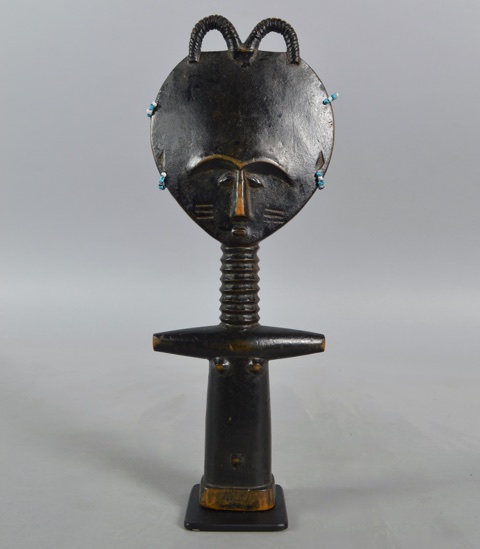
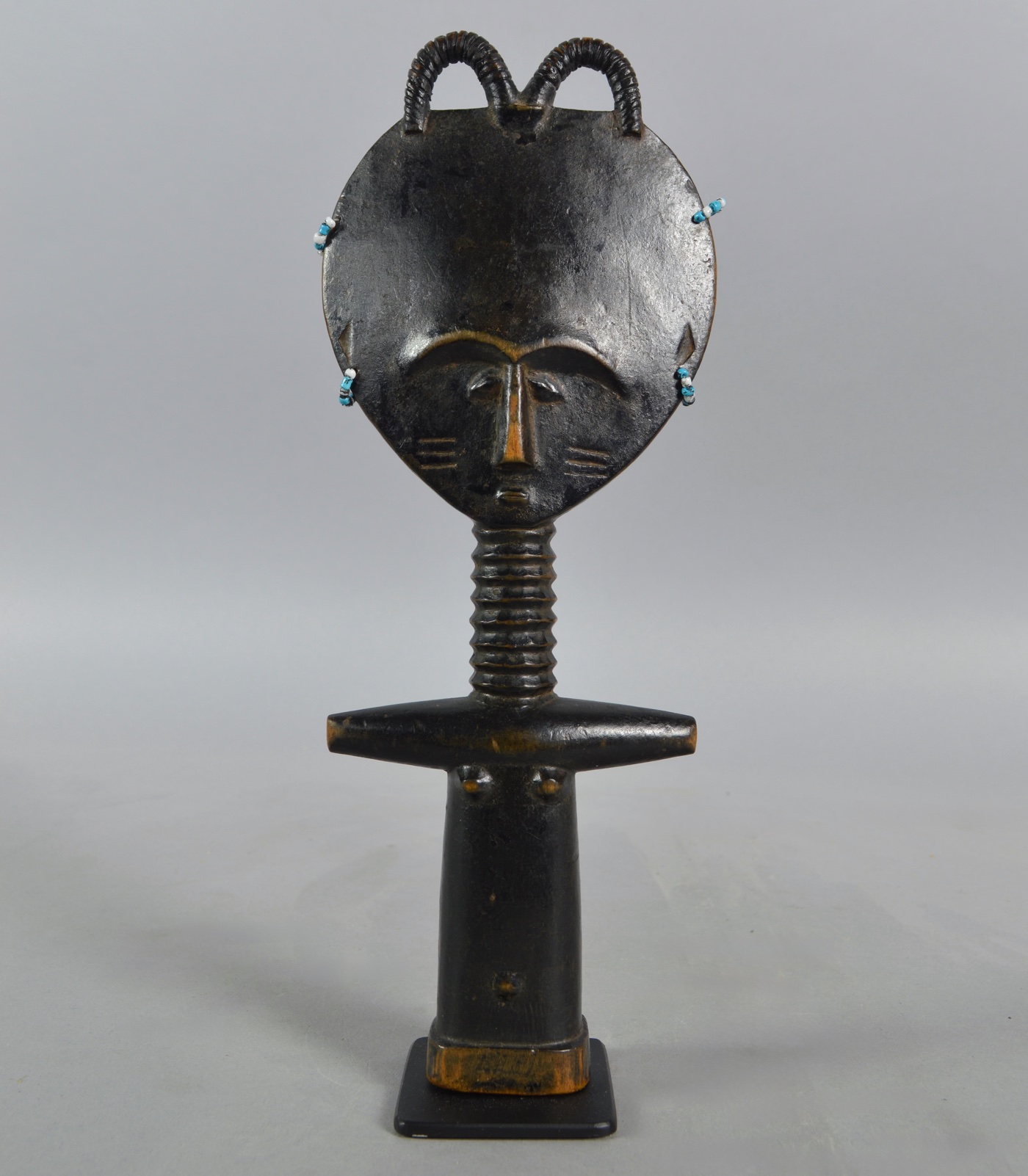
Ashanti fertility doll from Ghana, Akuaba. The figure stands, arms held out to the sides, with tiny breasts and navel carved in relief and a ringed, tubular neck supporting a disc-shaped head. Facial features include arched brows, thin, elongated nose, small, slit mouth, and linear scarification markings on cheeks. Two rounded braids are present atop head, as well as four beaded strands on the periphery.
Jeanne Bueche Collection, Switzerland
Cécile Kerner, Belgium
Dr. Ron van Doorn Collection, The Netherlands
van Doorn (Ron) & Cole (Herbert M.), “Akua’ba Asante Wednesday Child”, Essen: Druckpartner, Druck- und Medienhaus, 2021: #2306 (p. 202)
Very good condition.
Price$1,800
Payment arranged directly with the gallery
Ten-day examination period
The Akuaba fertility doll is among the most distinctive and recognizable forms of Ashanti art. Traditionally associated with female fertility and the desire for healthy children, its name derives from the legendary Akua, a woman unable to conceive who sought the counsel of a traditional priest. He instructed her to commission a wooden figure and care for it as though it were her own child. In time, according to the story, Akua gave birth to a daughter. The legend gave rise to a lasting tradition in which women carried Akuaba dolls on their backs, secured in the same manner as infants, and nurtured them in the hope of encouraging conception and ensuring a successful pregnancy. They were also cherished during pregnancy as talismans for the birth of a healthy and beautiful child. The doll’s distinctive features—a broad, flattened circular head, high forehead, delicate facial features, and often ringed neck—embody Ashanti ideals of feminine beauty and well-being. Yet the Akuaba transcends its role as a symbol of fertility. Carved from wood but invested with deeply human aspirations, it gives tangible form to the hopes of motherhood, the continuity of family, and the enduring promise of new life.